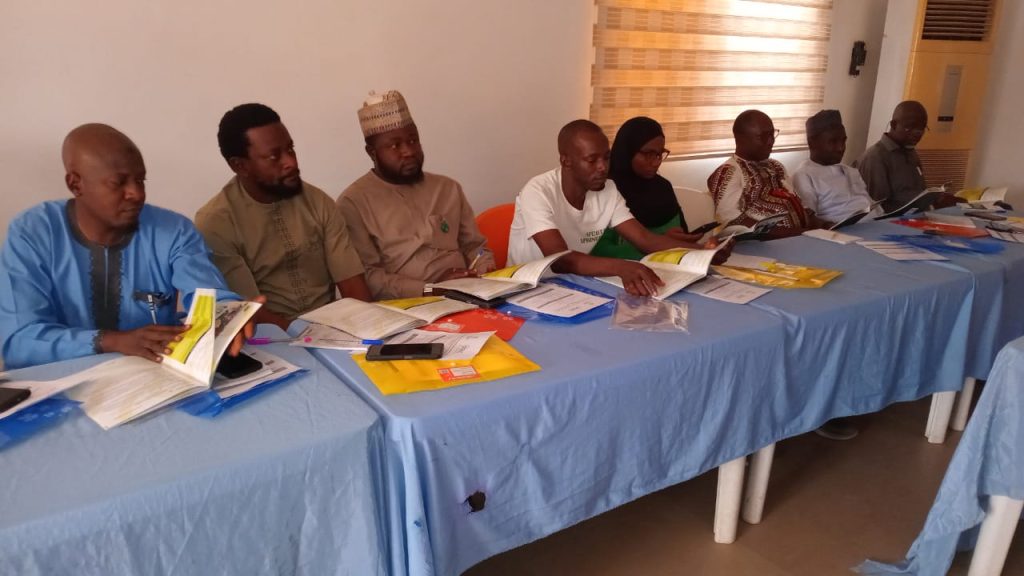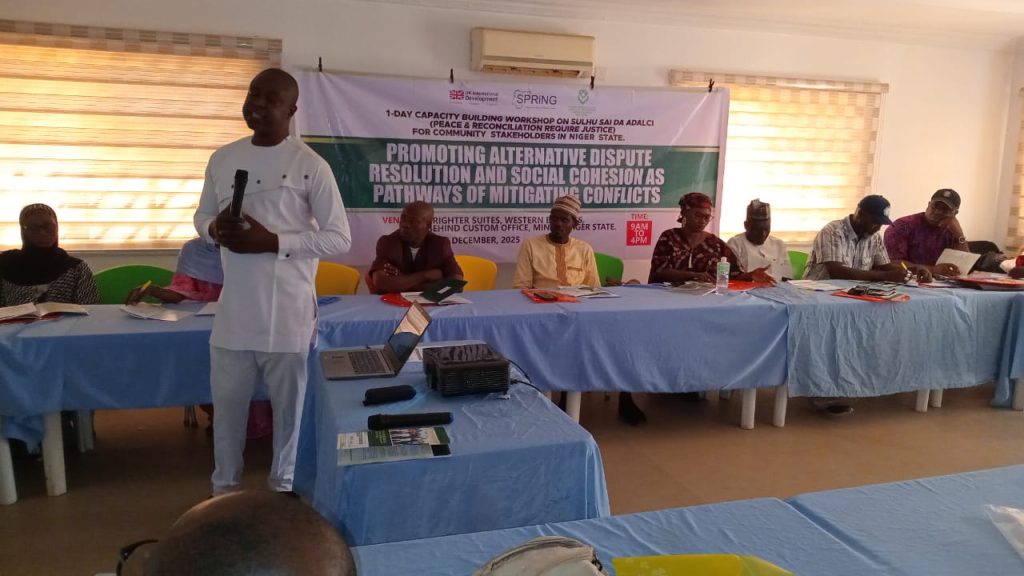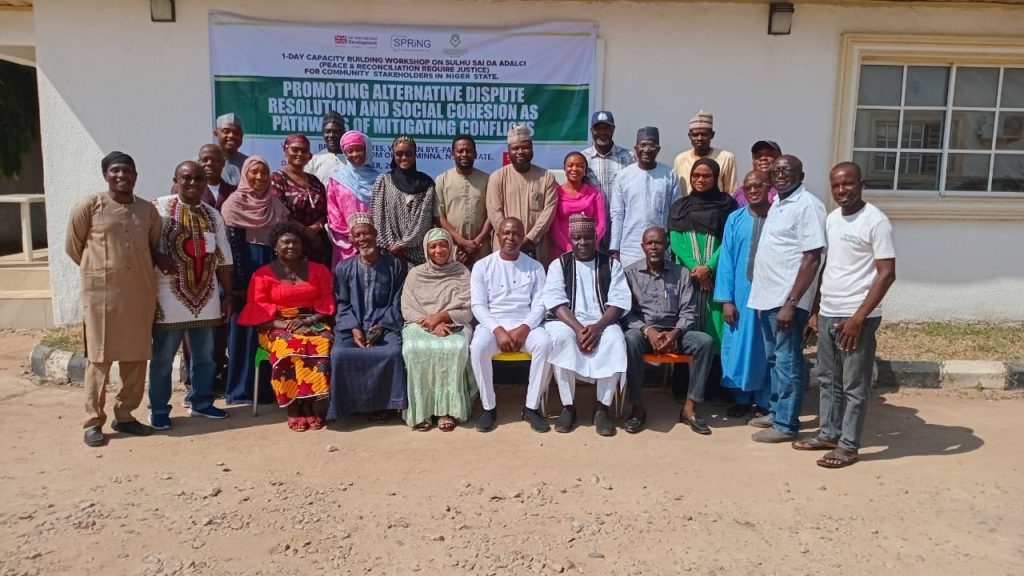
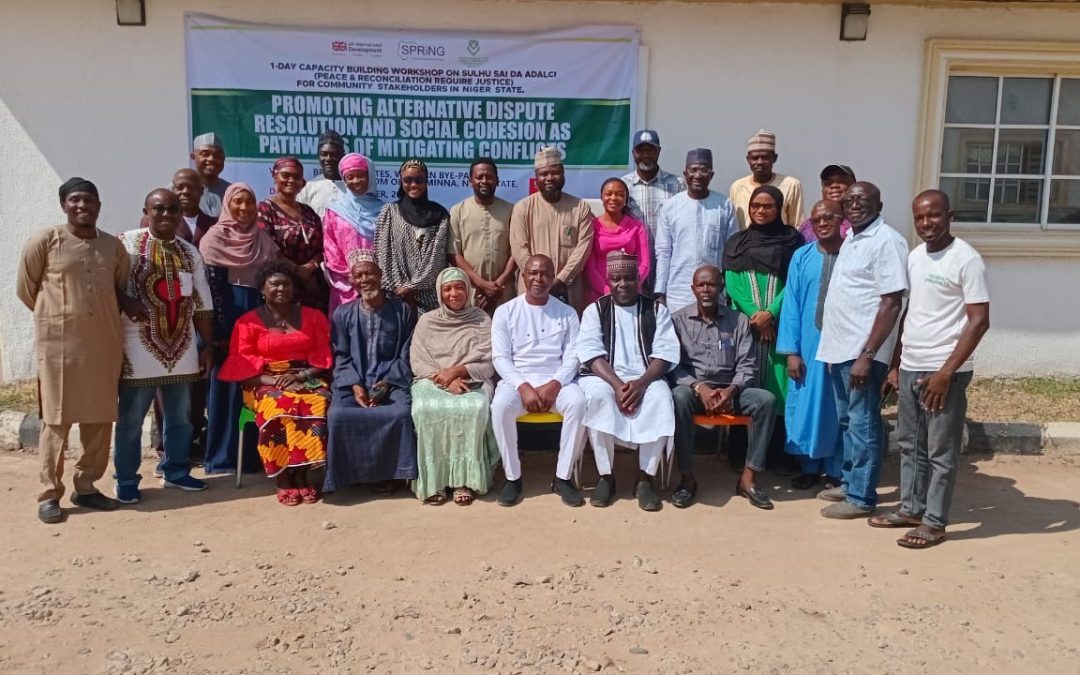
As part of its continued commitment to mitigating conflicts and fostering social cohesion across Nigeria, GACRB successfully organised a two-day capacity-building workshop for community stakeholders in Niger State.
The workshop, held under the Sulhu Sai Da Adalci framework—Peace and Reconciliation Require Justice, brought together 50 participants drawn from Munya, Shiroro, and Rafi Local Government Areas. Participants included community leaders, faith-based actors, women, youth representatives, and other key stakeholders who play critical roles in peacebuilding at the grassroots level.
The primary objective of the workshop was to strengthen participants’ understanding and practical application of Sulhu, a traditional approach to restorative justice that emphasizes dialogue, accountability, healing, and reconciliation as pathways to sustainable peace. Through interactive sessions, group discussions, and practical exercises, participants explored how restorative justice can be used to address grievances, rebuild trust, and prevent the escalation of community conflicts.
One of the major takeaways from the workshop was the strong acknowledgement—by participants from diverse religious and cultural backgrounds, of the relevance and effectiveness of the Sulhu Sai Da Adalci manual developed by GACRB. Participants recognized the manual as a practical and adaptable toolkit for promoting inclusive community-level dialogue and reconciliation. Its emphasis on justice, mutual respect, and local ownership was widely seen as critical for resolving long-standing disputes and preventing future conflicts.
Importantly, the workshop created a safe and inclusive space for interfaith engagement, enabling participants to share experiences, learn from one another, and identify common values that unite their communities despite differences. This collective learning reinforced the understanding that sustainable peace cannot be achieved without justice, and that locally grounded approaches are essential for meaningful and lasting conflict resolution.
The outcomes of the workshop highlight the importance of investing in community capacity as a critical pathway for exiting cycles of violence and building resilient, peaceful societies. By equipping local stakeholders with the right tools and knowledge, GACRB continues to contribute to strengthening early response mechanisms and community-led solutions to conflict across Nigeria.
GACRB expresses its profound gratitude to the Foreign, Commonwealth and Development Office (FCDO), through the SPRiNG Project, for funding this important initiative. The support provided has made it possible to advance community resilience and promote conflict prevention efforts in Niger State, in line with GACRB’s broader commitment to peacebuilding and social cohesion in Nigeria.
As GACRB continues its work, the organization remains dedicated to supporting inclusive, justice-driven approaches that empower communities to take the lead in resolving conflicts and building sustainable peace from within.