
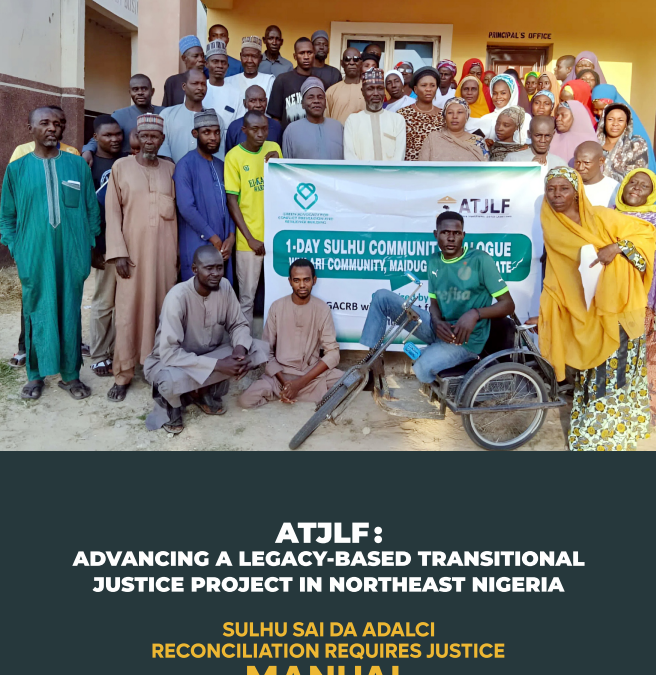
For over sixteen years, communities across Borno, Adamawa, and Yobe (BAY) States have endured the devastating impacts of the Boko Haram insurgency — from displacement and loss of livelihoods to ruptured social ties and mistrust. As thousands of former associates of Boko Haram surrender and seek reintegration, communities now face a new challenge: how to rebuild trust, restore justice, and foster peaceful coexistence among victims, survivors, and returnees.
Green Advocacy for Conflict Prevention and Resilience Building (GARCB), with support from the Africa Transitional Justice Legacy Fund (ATJLF), is working to strengthen community-led peacebuilding through locally grounded approaches to transitional justice.
The GARCB Transitional Justice Manual serves as a practical guide for stakeholders, faith leaders, community structures, and peace advocates in the BAY states. It builds understanding around indigenous mechanisms of justice and reconciliation, including sulhu (mediation) and adalci (justice), and explores how these concepts can be applied to promote healing, accountability, and sustainable peace.